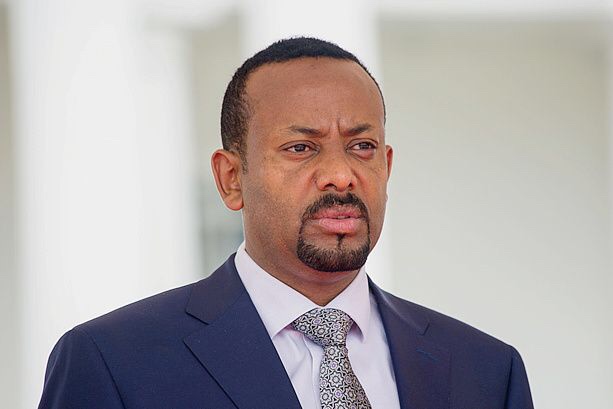

ADDIS ABABA – Prime Minister Abiy Ahmed has for the first time since war broke out in northern Ethiopia 19 months ago signaled his readiness to negotiate with the Tigray People’s Liberation Front (TPLF).
Analysts say a standoff, economic and diplomatic pressure and a growing humanitarian crisis have brought Abiy to the table, but any talk of peace risks alienating former allies.
Fighting in the Tigray region has been largely suspended since a ceasefire came into effect in March. Outright victory is considered near impossible for both sides, but the status quo has its own problems.
“This peace process is not a sudden development, but the result of a months-long stalemate that left both sides with unsatisfactory options,” said Ben Hunter, an analyst for East Africa’s risk analysis firm Verisk Maplecroft.
For the TPLF, the Tigray region, largely under their control, suffers from a catastrophic lack of basic services which makes life extremely difficult for millions of people.
Convoys bringing emergency supplies to the battle-torn region resumed in April, but the United Nations says aid is not enough to reach civilians. Tigray remains under a communications blackout and is without fuel, electricity and banking services.
Abiy, meanwhile, is under heavy diplomatic pressure to end the war, including from the United States, where sanctions are being considered.
Ethiopia’s economy is struggling and international aid is desperately needed – especially in the form of drought relief, as a record drought prolongs a food crisis.
WAR BATTERED ECONOMY
Inflation in Ethiopia hit new highs in May – food prices alone rose by 43.9% – while foreign exchange reserves evaporated.
“War is at the heart of the current economic devastation,” said Awet Weldemichael, security expert for the Horn of Africa at Queen’s University in Canada.
International partners are reluctant to inject much-needed foreign currency into the war-torn country, he added.
Abiy also faces challenges away from Tigray.
Federal forces are stationed in Oromia, the country’s largest and most densely populated region, where attacks by the Oromo Liberation Army, a rebel group classified by the government as terrorist, have recently intensified.
This week the OLA, which allied itself with the TPLF last year, attacked the regional capital of Gambella – the first such attack by the rebels on a major town, Hunter said.
FRAYING ALLIANCES
Abiy also faces growing discontent in Amhara, Ethiopia’s second most populous region, which borders Tigray and supported federal forces, when war broke out in November 2020.
Hardliners want to completely destroy the TPLF, while others fear Abiy will make peace at the Amhara’s expense.
“The secret negotiations between Abiy and the TPLF…do not involve Amhara interests, the issues that concern Amharas,” said Tewodrose Tirfe, one of the founders of the Amhara Association of America, based in the United States.
Their main concern is the status of two fertile lands which some Amhara say were stolen from Tigray in 1991, when the TPLF led Ethiopia’s ruling coalition.
These areas – known as Wolkait and Raya – had been reclaimed since the start of the war and represented “red lines” that could not be crossed, Tewodrose said.
“If the Amharas don’t like the negotiated outcome – are not happy with it, especially regarding Wolkait and Raya, then the Amharas will fight it (Abiy),” he said.
Since mid-May, thousands of people have been arrested in Amhara in a sweeping crackdown that the government says targets criminals.
However, Tewodrose described those gathered as “other voices”, such as journalists and students.
BALANCING ACT
Abiy must walk a tightrope to meet the demands of the TPLF without antagonizing his former allies or threatening his own power base.
The TPLF made the return of West Tiger – territory occupied by Amharic and Eritrean forces – a condition of a ceasefire.
“Abiy will fight to persuade Amhara nationalists to cede control of Western Tigris because they claim it is a historically Amharic country,” Hunter said.
Responding to TPLF demands for greater political autonomy could also provoke similar demands from other parts of multi-ethnic Ethiopia and weaken Abiy’s federal power base in Addis Ababa.
As for Eritrea – historical enemy of the TPLF and ally of Abiy in the conflict – its president Isaias Afwerki “wants to defeat Tigray militarily while weakening Ethiopia, and he will therefore try to keep the conflict warm”, declared Hunter.
“The risks for Prime Minister Abiy are like the risks for anyone who enters a conflict in a team, but then unilaterally makes peace with the opponent,” Awet said.
“The Prime Minister, the country and the region had better try to bring all of his allies to the table with the TPLF (rather than) go it alone now.”
- Editor/ additional report by AFP