LONDON – In response to claims of bullying behaviour in the Ministry of Justice and other Whitehall agencies, Dominic Raab, the former Justice Secretary and Deputy Prime Minister, has resigned from his position.
The senior Conservative MP was the subject of numerous formal complaints over his interactions with civil servants, including allegations that he humiliated and intimidated staff members, prompting some to throw up or cry prior to meetings.
Raab had constantly rejected any intimidation of government officials, even some who held senior positions.
The resignation of Raab, a close political ally of Rishi Sunak, is a big setback for the Chancellor, who now finds himself under scrutiny for his decision to permit Raab to remain in his position during an investigation by renowned employment lawyer Adam Tolley KC.
In light of the Nadhim Zahawi tax scandal, several Tory MPs are privately worried that Sunak’s handling of the problem could further jeopardise his campaign promise to promote “integrity, professionalism, and accountability at every level” of his administration as he attempts to move past the Boris Johnson period.
Raab’s enforced ministerial departure over claims of bullying is the second since Sunak became prime minister on 25 October.
In early November, Gavin Williamson resigned as a cabinet office minister after allegations, revealed by The Guardian, that he told a senior civil servant to “slit your throat” while he was defence secretary, and the emergence of abusive messages to a Tory colleague.
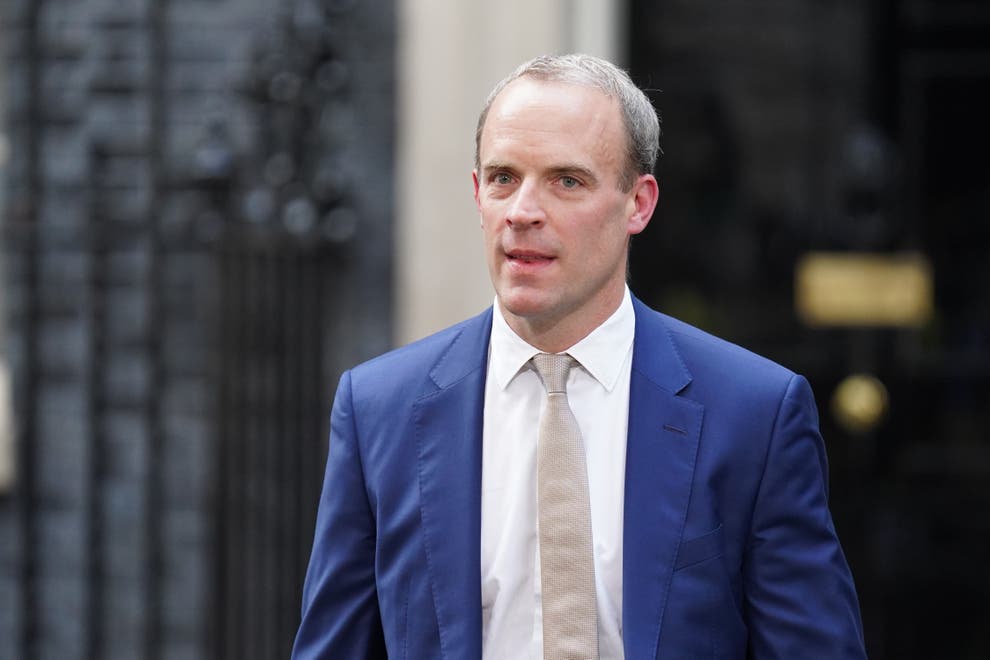
Investigation of Dominic Raab
The investigation by Adam Tolley KC interviewed dozens of Raab’s staff as complainants or witnesses, or submitted written evidence to the inquiry.
He also interviewed all three senior civil servants who worked with Raab while he was holding cabinet positions.
Tolley’s remit was solely to “establish the facts” of Raab’s conduct, and it was left to the prime minister to decide whether he should face sanction.
“When I’m presented with conclusive independent findings that someone in my government has not acted with the integrity or standards that I would expect of them, I won’t hesitate to take swift and decisive action,” said Prime Minister Sunak in February, suggesting that if Tolley concluded that his deputy had fallen short of the standards expected of somebody in his position, he would be sacked.
Raab had also said he would respect the findings of the inquiry.
In a statement, Raab said, “I have decided to resign as Justice Secretary with immediate effect. I am grateful to have had the opportunity to serve as Justice Secretary and Deputy Prime Minister, and I will continue to support the government in any way I can.”
The news of Raab’s resignation has been met with mixed reactions. Some have praised his decision to step down, while others have criticised Sunak’s handling of the situation.
The focus now shifts to who will replace Raab as Justice Secretary and Deputy Prime Minister.