MAPUTO, Mozambique — President Filipe Nyusi of Mozambique announced during his annual State of the Nation address on Wednesday that the government is projecting a 5.5% growth in the country’s Gross Domestic Product (GDP) for the year 2024.
The optimistic outlook considers factors such as a slowdown in the inflation rate and exchange rate stability due to ongoing restrictive measures.
President Nyusi acknowledged the importance of external support and favorable climatic conditions for achieving the forecasted growth.
He highlighted that the anticipated GDP expansion is strongly linked to the liquefied natural gas (LNG) projects in the Rovuma Basin in the northern province of Cabo Delgado.
The Coral Sul floating LNG platform, owned by Italian energy company ENI, is currently operational in the Rovuma Basin.
President Nyusi revealed that by the end of the year, there would have been 41 shipments of LNG from Coral Sul, generating $75 million for Mozambique.
He emphasized the economic benefits, stating, “Our gas is already being consumed in Europe and Asia, which is expressed in gains for our country.”
While Coral Sul has been successfully contributing to Mozambique’s economy, further LNG production is anticipated from Area One of the Rovuma Basin.
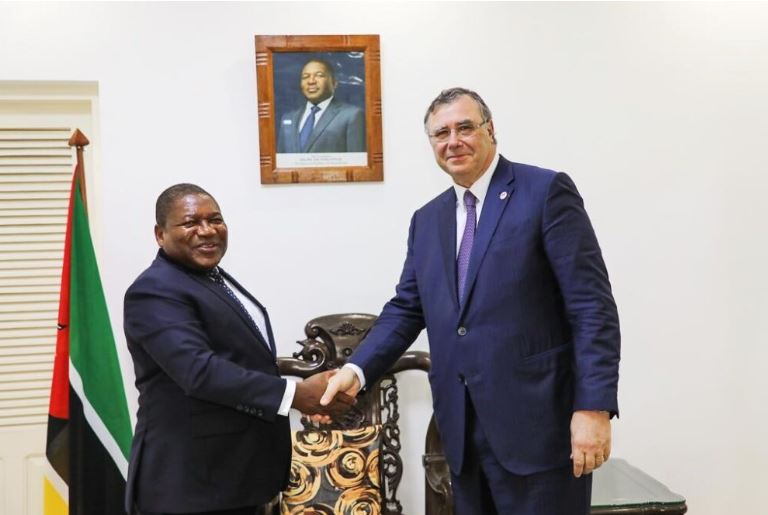
These additional resources will be processed at plants on the Afungi Peninsula, in Palma district, by a consortium led by the French company TotalEnergies.
Despite a setback caused by a terrorist attack on Palma in March 2021, President Nyusi expressed optimism about the resumption of operations at Afungi in 2024.
He emphasized the strategic importance of LNG projects for the country’s economic growth.
President Nyusi also provided updates on economic indicators, citing a decrease in the annual inflation rate to 8.06% in October.
He highlighted the country’s Net International Reserves, standing at $3.087 billion as of September 30, sufficient to cover three months of imports of goods and non-factor services, excluding mega-projects.
However, the President acknowledged challenges, including the strain on state finances resulting from the implementation of the new wage scale for public administration (TSU).
The state’s wage bill rose from 11.8 billion meticais to 15.8 billion meticais due to the elimination of wage discrepancies.
As Mozambique navigates economic dynamics, the focus on LNG projects remains pivotal for sustained growth in 2024, contingent on external support and favorable conditions.